The Clash (#15) | Evan’s 111 Artists
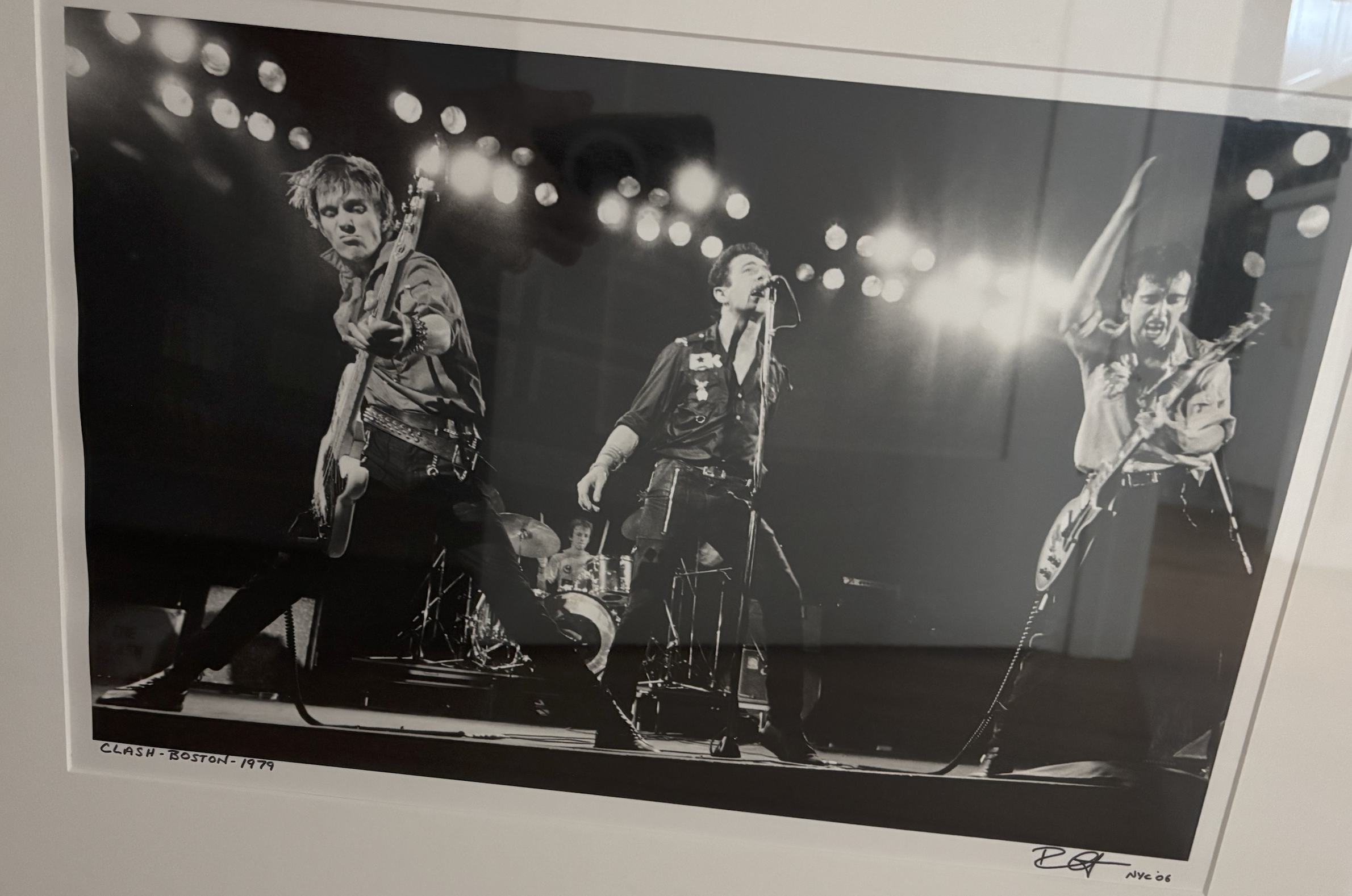
The Clash have been on my wall and in heavy rotation, always.
For those who have been reading each entry of Evan’s 111 Artists in chronological order, you will notice I am now in a different era of new music discovery.
Up until this point, I knew an artist by a song (maybe a few) from the radio. I likely recorded a song off the radio to play over and over on cassette. Maybe I’d read an article or seen pics in Rolling Stone or Spin.
Now MTV was starting to play a much different role than those mediums, and we got to “know” artists in a very different way.
The images from the Rock the Casbah video will forever be embedded in my mind as the ones that changed it all for me. Combat boots, doo-rags, buttoned-down sleeveless shirts. Low-slung guitars in a dusty setting, an armadillo as a major character, and the three guitar slingers just so raw and cool, rocking out together. I didn’t understand what the song meant at all, nor did I pick up on the oil drilling behind the drummer.
While The Clash were brand new to me and so many of us, at this point the band was nearly done. Don Letts, who directed the video, gets huge kudos for keeping those images intact as they entered the MTV era. It’s a bit mind-blowing to think that they created five bodies of work between ’77–’82, which includes the absolute masterpiece London Calling, a double record.
The arrangements were looser, but they gelled together perfectly, with some rough edges. The hair, the style, the sound… punk with some reggae, but I didn’t know that yet. I just knew I liked it. Totally authentic bad-asses, so believable, even though it was a music video.
WNEW was already playing London Calling by this point. It was an obvious anthem. When they opened for THE WHO at Shea Stadium, my mom agreed to take me if I got tickets. How cool was that?!
I was almost 13 when I waited on line at Bambergers, a department store which later became Macy’s, where they had a Ticketron. They sold out just before I got to the window. My heart was racing the whole time. I wanted to see them live SO badly. Devastating.
This was the beginning of a feeling that would come back many times over. Missing a show could be as rough as being ignored, rejected, or even dumped.
When I got an electric guitar for my Bar Mitzvah, we started jamming in Matt’s basement. At this point it was just Matt and me on guitar, with his brother Mike on drums. We played Should I Stay or Should I Go over and over, with some friends coming by to listen. I remember walking home with a few girls from EB through “the apartments,” down the path that cut through to our neighborhood.
At this point, we sucked. No vocals, no bass. Yet it was loud and fun. And the part at the end that speeds up turned into chaos. That was the best part. I don’t even think we had the chords right, but people wanted to watch us and hang out with us. It all felt so special, even going home to rehearse alone for our next jam session.
It was pretty obvious. The Clash’s music was more complex than the basic bar chord progressions we knew at the time.
Over the years I fell in love with The Clash. Not just the music, but the Strummer and Jones quasi-lead combo. Kind of like the Mick/Keith and Lennon/McCartney dynamics in some ways, though very different. While Strummer was the main guy for sure, in some ways they were equal front men, with complementary attributes both vocally and on guitar. As for the rhythm section, I can’t say Simonon took it all from Dee Dee Ramone. The Clash had a lot more going on than the four-on-the-floor assault of the Ramones.
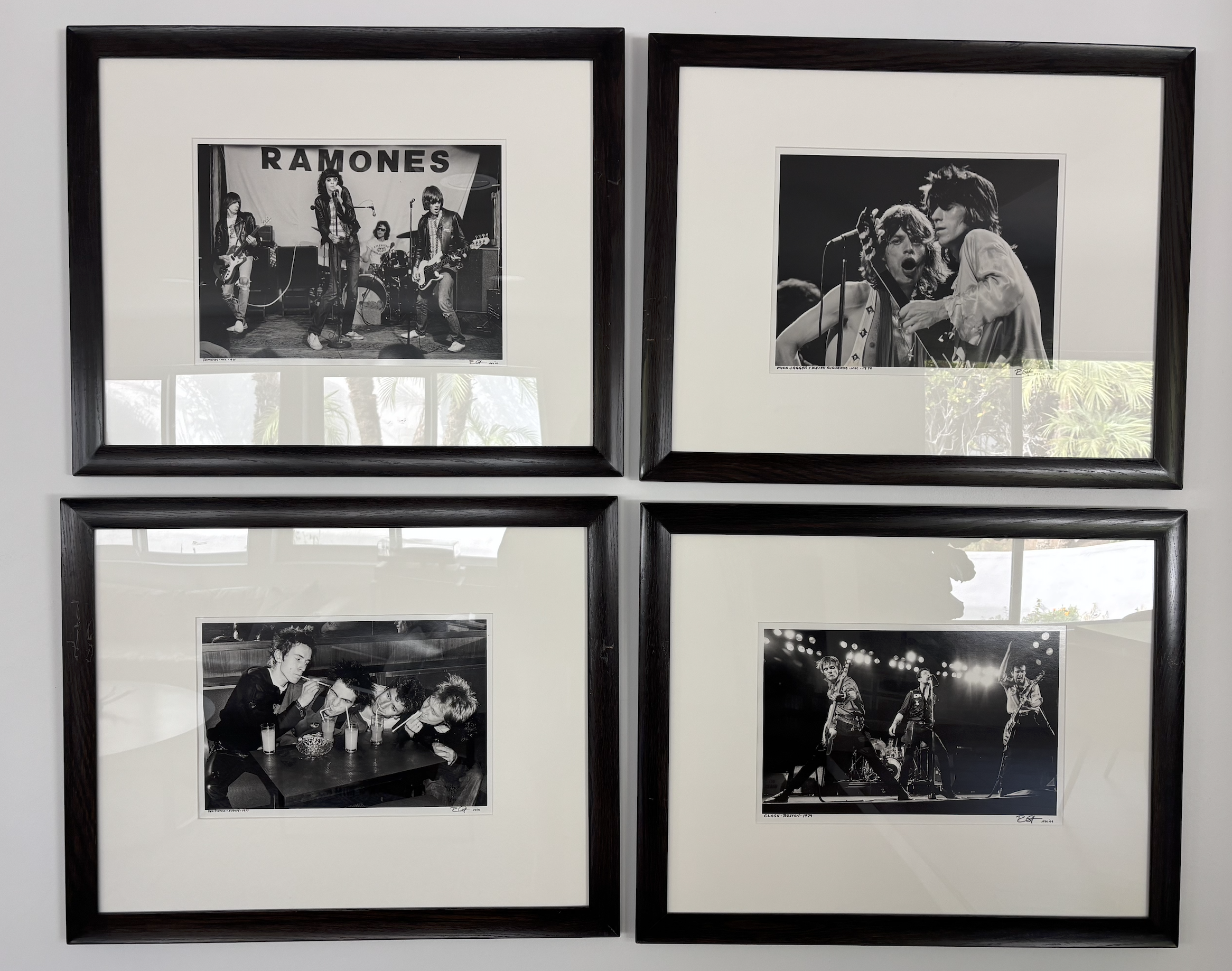
These classics hung together in my iHeart LA office and remain in my record room today.
Though I never did see The Clash live, I was lucky to catch Jones with B.A.D. when they came through Tempe, AZ, in ’91 at Club Rio. Rio was a college hangout best known for cheap drinks, drunk ASU kids, sticky floors, and a huge outdoor patio, just across the Salt River from ASU. Funny though, the Salt River never had water flowing ’88–’92. We used to take rides through the “river” in my Jeep, exploring the desert landscape.
The show was truly sick. High energy and genuinely amazing on every level. This was the early days of alt radio. It seemed like most of us there owned and loved the CD. The Globe and Rush were kind of hits, and seeing Jones felt like witnessing rock royalty that still had a fresh vitality. This might have been my first live experience with a DJ in the mix. No Clash songs, but that didn’t feel weird or like a letdown.
When I started in the music industry at BMG Distribution, we were all huge music fans, as were the people we talked to at retail. Five years later I moved to BMG Corporate in NYC for my first digital role, in ’97, and things naturally shifted further away from the music. I was fortunate to have a role that enabled me to stay close to the art.
Dave Gottlieb oversaw all of the Product Managers at our label RCA. We worked directly together on some of his projects, including the first Foo Fighters RCA release. He came from Sony, which owned The Clash recordings. He spoke of The Clash the way I did The Ramones. Once I had all of the CDs, including live cuts, I was all in.
The next massive Clash fan I met, and got to know very well, was Owen Grover.
Starting in ‘04 we worked side by side for seven or so years helping transform Clear Channel from a terrestrial broadcast company into a multi-platform content company. Our goal was first and foremost was for our thousands of employees across the country to believe in and embrace digital, as a ‘part’ of radio, not a threat to radio. Together we would strengthen our local brands and augment the in-car experience with on-demand artist and station content on our local radio station sites, as well as new digital-only radio stations.
Eventually we would bring all of this content into one place with an iHeartRadio app. Prior to ’08, we had an internal version of a music service that we didn’t promote. We called it “iHeartMusic.” Funny, we created this out of necessity internally so we could easily monitor all of our 750 stations’ digital content, from live streaming radio to on-demand content.
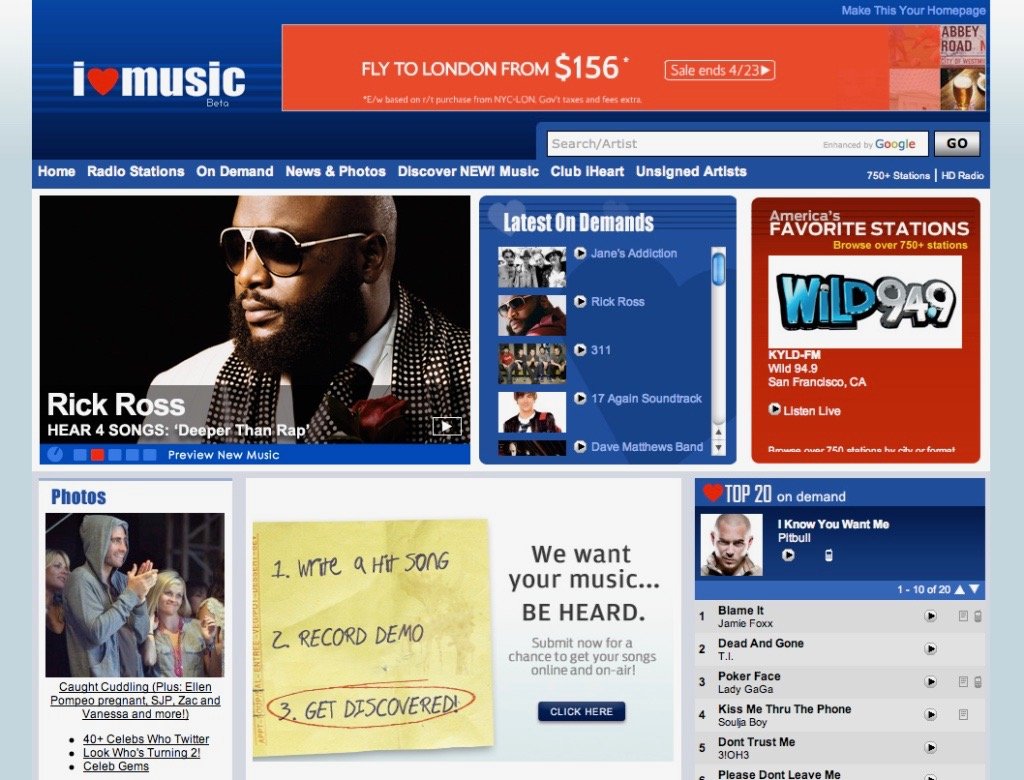
our I Heart Music (Beta) in ‘07 or so is the reason we were able to quickly launch the iHeartRadio App in ‘08
Digital was the answer to deepen the artist relationship with fans, and radio was in the perfect position to do it.
Our team at iHeart, about 100 corporate digital employees, was made up of passionate music fans. Owen and I worked together on all messaging, internal and external. We iterated constantly, pushing each other’s thinking. We always called ourselves Strummer and Jones.
The Clash are one of the most universally loved bands by artists, for so many reasons. They could not be pegged as one thing. They were articulate, technical musicians with a ton of feel. Well produced, but not over-produced. Unpredictable in a good way. Powerful as hell live. Worldly, but relatable to a kid from Jersey.
The Clash, and soon the Ramones, represented something that transcended music. It traveled with me into ice hockey, and into business.
It doesn’t need to be polished or perfect to connect. And the dynamic, and ultimately the strength and impact of a team, just like a band, has a shelf life.
Funny that at iHeart we lasted seven years, two years longer than The Clash. But the brand and app we created still live on as the name of the company. Pretty cool.
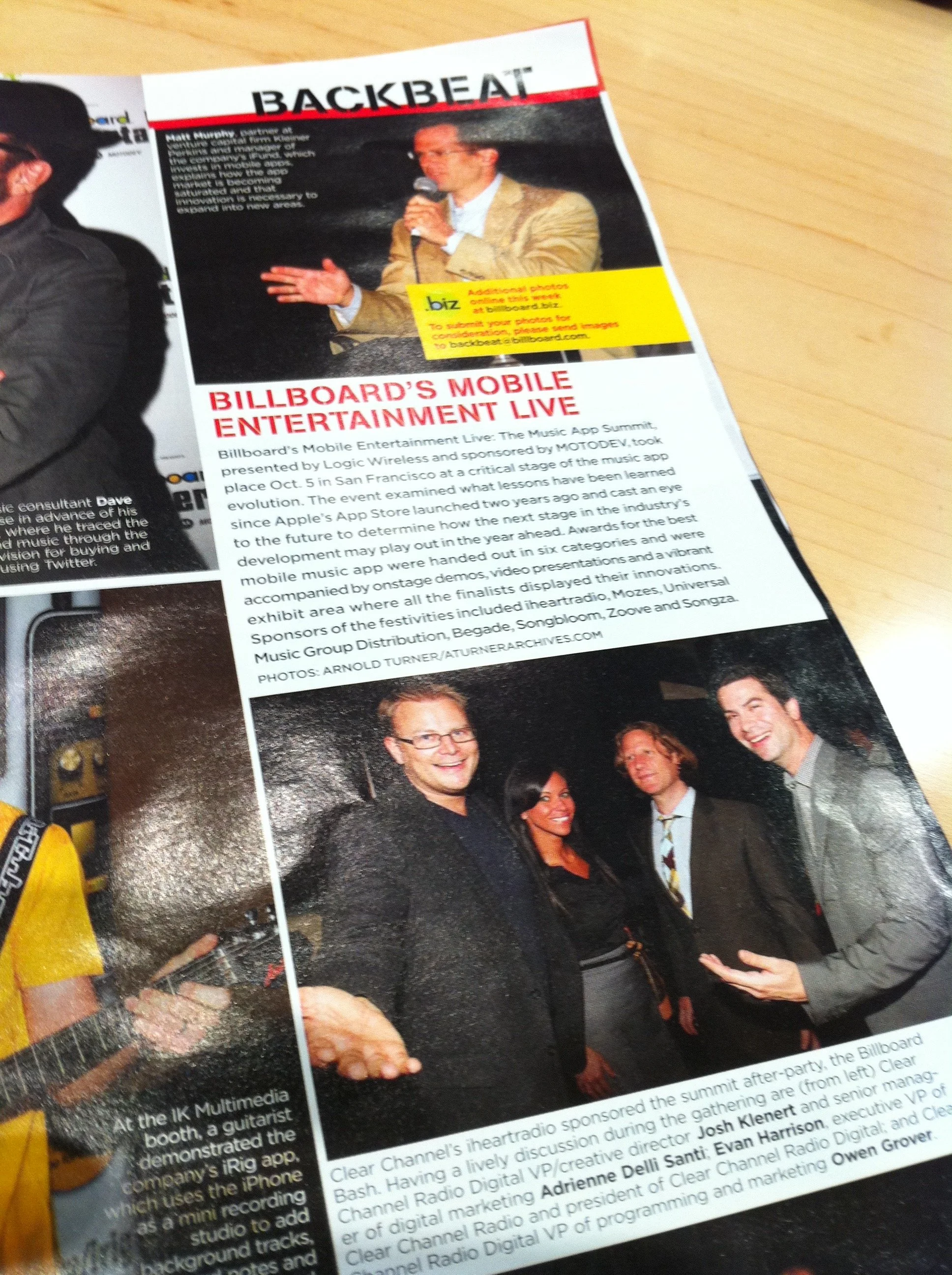
a fun event and evening for our team, my first big keynote
__________
“Dad, you always say this song is a F*CKING MASTERPIECE… make a list.”
The Clash masterpieces are listed below, and more on my 1k+ song Spotify Playlist — Evan’s 111 Artists
Train In Vain (Stand By Me), London Calling, Spanish Bombs, Rudie Can’t Fail, Straight To Hell, Death Or Glory, Jimmy Jazz, Police On My Back, Should I Stay or Should I Go, Rock The Casbah, Rebel Waltz, One More Time, The Magnificent Seven, Janie Jones, White Riot, Police & Thieves, GarageBand
Joe Strummer: Johnny Appleseed, Road To Rock ‘n’ Roll, Redemption Song *** If you have never heard of this, listen now, the duet w Johnny
BAD: Rush, The Globe, E=MC2, The Bottom Line, Medicine Show
BAD with Strummer: V. Thirteen